
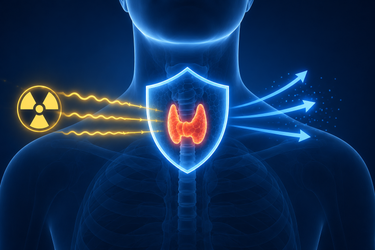
Necessity of Thyroid Shields
Jul 15th 2026
The thyroid gland is one of the most radiosensitive organs in the body. Located in the anterior neck, it sits in the scatter field during most fluoroscopic procedures and many diagnostic examinations. Thyroid cancer is among the most well-documented radiation-induced malignancies, with a dose-response relationship that has been studied extensively since the atomic bomb survivor cohorts.
Despite this well-established risk, thyroid shield use remains inconsistent in many imaging departments. They get lost, forgotten, or skipped because they're uncomfortable or inconvenient. The solution isn't just having thyroid shields available, it's having the right style and size for every staff member and every clinical situation.
The Radiation Risk to the Thyroid
The thyroid gland is particularly susceptible to radiation-induced carcinogenesis because of its active uptake of iodine and its position in the body. During fluoroscopic procedures, the thyroid is exposed to scatter radiation from the patient and the x-ray tube. Studies have shown that interventional operators who consistently use thyroid collars have significantly lower thyroid dose measurements than those who don't.
The risk is age-dependent as younger workers face greater lifetime risk from thyroid radiation exposure than older colleagues. This makes thyroid protection particularly important for residents, fellows, and early-career technologists who will accumulate occupational exposure over decades of practice.
Techno-Aide Thyroid Shield Styles
One of the reasons thyroid shields go unused is that departments often stock a single style that doesn't work for everyone. Techno-Aide manufactures six distinct thyroid shield styles and each is designed for different use cases and comfort preferences.
Bib Style
The Bib thyroid shield provides broad anterior neck coverage in a simple, quick-donning design. It hangs from behind the neck and covers the thyroid region without requiring Velcro or buckle closures. This style is fastest to put on and remove, making it ideal for busy general radiography rooms where staff may need protection intermittently throughout the day.
Full Binding
The Full Binding thyroid shield wraps completely around the neck with a full binding edge finish. This design provides the most complete circumferential coverage and a polished, comfortable edge that won't irritate skin during extended wear. Full Binding shields are the preferred choice for interventional and fluoroscopy staff who wear thyroid protection throughout long procedures.
Mid Binding
The Mid Binding shield offers a middle ground — partial binding provides a cleaner edge finish than unbound options while keeping the shield lighter and less bulky than full binding. It's a practical choice for departments that want improved comfort without the additional cost of full binding construction.
No Binding
The No Binding thyroid shield is the most economical option, providing standard radiation attenuation without the additional edge finishing. For departments purchasing thyroid shields in quantity — equipping every staff member with their own shield, for example — the No Binding style allows more units within the same budget.
Mammography Thyroid Shield
Mammography presents a unique thyroid protection challenge. The mammography thyroid shield is specifically designed with a lower profile and contour that doesn't interfere with breast positioning or compression during the examination. Standard thyroid shields can be too bulky near the collar region, potentially displacing breast tissue or interfering with proper positioning. The mammography-specific design solves this problem.
Pediatric Thyroid Shield
Children have proportionally smaller necks and are more radiosensitive than adults, making thyroid protection during diagnostic imaging particularly important. Techno-Aide's Pediatric thyroid shield is sized appropriately for pediatric patients and provides the same attenuation level in a smaller format. Having properly sized pediatric thyroid shields available prevents the common workaround of using adult shields on children — which often results in poor coverage, discomfort, or the shield being skipped entirely.
Integration with Protective Apparel
Thyroid shields work best as part of a complete protection system. Many of Techno-Aide's vest-and-skirt systems include integrated thyroid collar options, which eliminate the need for a separate shield and ensure the thyroid is always protected when the vest is worn. For staff who use front-closing aprons or other garment styles, standalone thyroid shields fill the coverage gap.
The key is consistency. A thyroid shield that's easy to find, comfortable to wear, and quick to put on gets used. A shield that's uncomfortable, missing, or locked in a distant cabinet doesn't. Stock enough shields in enough sizes and styles that every staff member has a good option available at the point of use.
Care and Replacement
Thyroid shields contain the same radiation-attenuating materials as lead aprons and should be inspected regularly for integrity. Because they're smaller and lighter than aprons, they're often handled less carefully. They can find themselves tossed on counters, stuffed into pockets, folded and unfolded repeatedly. This handling accelerates wear. Store thyroid shields hanging on hooks or on a dedicated rack. Inspect them fluoroscopically at least annually, and replace any shield that shows cracks, thin spots, or loss of material integrity.
The investment is modest relative to the protection provided and trivial relative to the cost of a thyroid cancer diagnosis in a worker whose gland was consistently unshielded.