
Small Accessories Make a Big Difference
Jun 16th 2026
Radiology departments run on the big-ticket items like x-ray machines, CR/DR systems, lead aprons, mobile barriers, but it's often the smallest accessories that have the biggest impact on daily workflow, staff comfort, and infection control. The gear you don't think about until it's missing. Here's a look at several accessories that seasoned imaging departments keep stocked and why they matter more than their modest price tags suggest.
EZ Cap: Head Covers for Imaging
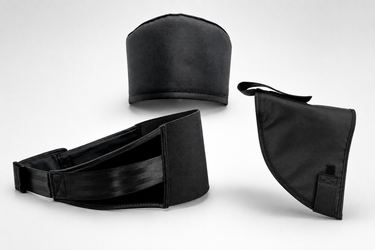
The EZ Cap is a lightweight, lead lined head cover designed to protect the brain from excess scatter radiation during imaging, particularly for longer CT, MRI, and fluoroscopy procedures.
The Cap is crafted with high-quality fabric and lined with Outlast® cooling fabric technology around the interior providing an element of breathability and comfort that other comparable products on the market can’t. It’s perfect for extended durations when necessary and crucial to preventing brain damage from scatter radiation accumulating over time.
EZ Belt: Redistributing the Load
Lead apron weight concentrated on the shoulders can quickly cause fatigue. An apron belt offers a partial solution for departments that aren't ready to invest in two-piece systems like a vest and skirt combo.
The concept is simple: a belt cinches the lead apron at the waist, transferring a portion of the garment's weight from the shoulders to the hips. It doesn't achieve the same weight distribution as a dedicated vest-and-skirt system, but it's a meaningful improvement over an unsupported apron and it works with existing single-piece garments, requiring no new apron purchase.
Best used for: Staff who wear front or wrap aprons for moderate durations (30-90 minutes). The belt won't transform an uncomfortable apron into an all-day-wear solution, but it noticeably reduces shoulder load and improves posture during procedure-length wear.
Fit tip: Position the belt at the natural waist at or slightly above the iliac crest. Too high and it bunches the apron material. Too low and it doesn't effectively transfer weight to the hip structure.
EZ Sleeve: Protection for Interventionalists
Standard lead aprons protect the torso, but they leave the arms exposed. For most imaging staff, this is appropriate since arms are rarely in or near the primary beam during routine radiography. Interventional procedures are a different story.
Interventional radiologists, cardiologists, and their assisting staff frequently work with their hands and forearms close to the fluoroscopy field. Scatter radiation exposure to the arms and hands can be significant over time, particularly in high-volume practices performing dozens of catheterizations or interventional procedures per week.
Radiation protection arm sleeves extend shielding from the shoulder to the wrist, covering the area that standard aprons leave exposed. They're typically 0.25mm Pb equivalent which is lighter than torso protection, but sufficient for the scatter doses involved. Most designs use elastic or Velcro closures for easy donning and doffing between procedures.
Who needs them: Interventional radiology staff, cardiac catheterization lab teams, and any personnel who routinely work with their arms adjacent to a fluoroscopy field. For general radiography and CT, sleeve guards are typically unnecessary.
Lock-N-Secure: Stabilizing DR Panels
Digital radiography panels are expensive, sensitive equipment. A wireless DR panel can cost $20,000-$50,000 or more and dropping one during a bedside or table-side exam disrupts workflow, is a potential image loss, and possibly leads to a retake that adds patient dose.
Lock-N-Secure systems provide a reliable mechanism for holding DR panels in position during imaging. Whether the panel is in a wall stand, a table bucky, or a portable holder, a positive locking system prevents the panel from sliding, shifting, or falling during positioning and exposure.
This is especially important in portable (mobile) radiography. Technologists performing bedside exams in the ER, ICU, or OR are working in cramped, chaotic environments where panel stability can't be taken for granted. A panel holder with a secure locking mechanism provides peace of mind and allows the technologist to focus on patient positioning and technique rather than worrying about equipment stability.
The Compound Effect of Small Improvements
None of these accessories is a headline item in a capital equipment budget but taken together, these accessories represent a department that pays attention to details and values staff comfort, equipment protection, and workflow efficiency. They're the kind of investments that experienced managers make because they've seen what happens without them: higher rates of complaints, preventable equipment damage, and infection control gaps that could have been closed for a few dollars per exam room.