
Long Lasting Lead
Nov 9th 2026
One of the most common questions we hear is, 'How long is this apron supposed to last?' The honest answer, which every manufacturer should give you, is that it depends entirely on how the garment is used, stored, and maintained. We can build the most durable garment possible, but if it's folded over a chair every night, it won't last.
Here's what we know from decades of manufacturing experience and the published research on garment longevity.
The General Range: 5 to 10 Years
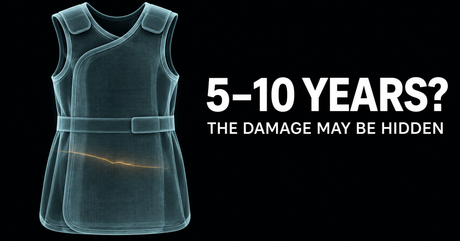
A well-constructed radiation protection garment, properly stored and maintained, typically provides reliable service for 5 to 10 years. That's a wide range because the variables matter enormously.
Use frequency: A garment worn daily in a busy cath lab experiences far more physical stress than one worn weekly in a general radiography room. Daily wear accelerates fatigue in the attenuating material, the fabric encasement, the closures, and the seams.
Storage method: This is the single biggest factor in garment longevity, and we'll cover it in detail. Garments that are hung properly last years longer than garments that are folded.
Media type: Traditional regular lead garments tend toward the longer end of the lifespan range since lead is a stable material that doesn't degrade easily when not subjected to physical stress. Lightweight composite and lead-free media can be somewhat more susceptible to cracking if mishandled, though modern formulations have improved dramatically.
Cleaning protocol: Regular cleaning with appropriate products extends lifespan. Harsh chemicals, abrasive scrubbing, or neglected cleaning (leading to bodily fluid and salt buildup) all accelerate degradation.
What Kills a Garment: The Silent Threats
Folding
Folding a radiation protection garment cracks the internal attenuating material. Every fold creates a stress line where the shielding media bends beyond its design limits. Repeated folding in the same location produces a crack that grows with each fold-unfold cycle. And here's the insidious part: the crack is invisible from the outside. The fabric looks fine. The garment looks fine. But the internal attenuation layer has a gap that allows radiation to pass through unimpeded.
This is why proper hanging storage is an absolute requirement for garment integrity and not just a best practice or recommendation.
Draping Over Equipment
Draping an apron over the back of a chair, a monitor, a table edge, or any narrow surface creates the same bending stress as folding. The attenuation layer is forced into a sharp curve at the draping point, and the garment's weight pulls the bend tighter. Over time the internal material cracks at the bend point, and sometimes in just weeks of repeated draping.
Chemical Damage
The vinyl or nylon encasement protects the internal attenuating material from moisture and contamination. When harsh cleaning chemicals crack or degrade the encasement, moisture reaches the shielding media. For lead-based media, moisture causes oxidation. For composite media, it can cause delamination of the layered materials. Once moisture infiltrates the core material, degradation accelerates rapidly.
Inspection: How to Know When It's Time
The Joint Commission mandates annual inspection of all radiation protection apparel. Annual is the minimum and semi-annual visual and tactile inspection is recommended for high-use garments, with annual fluoroscopic imaging for comprehensive assessment.
Visual inspection: Look for cracks, tears, or punctures in the outer fabric. Check the seam integrity. Examine the closures for proper function. Inspect the edges and binding for separation.
Tactile inspection: Feel the garment with your hands, working systematically across every panel. Cracks or voids in the internal material sometimes produce a noticeable unevenness or a 'crunchy' feel when the material is flexed gently.
Fluoroscopic inspection: Place the garment flat on a fluoroscopy table and image it at low technique factors. Cracks, voids, and thin spots in the attenuating material appear as bright lines or areas where radiation is passing through unimpeded. This is the definitive inspection method and reveals defects that no visual or tactile examination can detect.
Replacement Criteria
Replace any garment that shows breaks in the lead lining during fluoroscopic inspection. Research suggests specific thresholds: defects exceeding 15 mm² over critical organs (thyroid, gonads) or 670 mm² along seams, overlapped areas, or on the back. These thresholds are guidelines but any crack in the primary shielding field compromises the garment's purpose.
Replace garments with severely degraded closures that can't maintain secure fit, extensive fabric damage that exposes the internal material to moisture, or structural deformation that prevents proper draping and coverage.
Extending the Life of Your Investment
The garments that reach the 10-year mark share a few characteristics. They're hung on proper racks after every use, cleaned regularly with appropriate products, inspected on schedule, and treated with the same respect as any other piece of clinical equipment. Techno-Aide builds every garment for longevity, but longevity requires partnership between the manufacturer and the user.