Total Body Fluoroscopy Protection Guide

Total Body Fluoroscopy Protection Guide

Jul 6th 2026

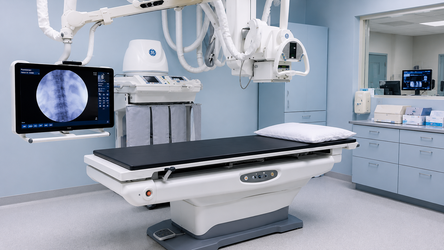
The fluoroscopy suite is the highest-exposure environment in diagnostic imaging. Fluoroscopy produces continuous radiation for the duration of the procedure. A complex interventional case may involve 30 minutes, 60 minutes, or more of fluoroscopic time, with staff positioned within feet of the patie …
Complete Head-to-Toe Protection

Complete Head-to-Toe Protection

Jun 18th 2026

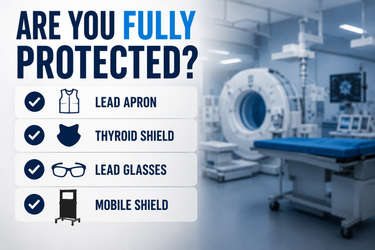
Most radiation protection conversations start and end with the apron. Rightfully so, since the torso houses the body’s most critical organs, and covering it is the single highest-impact shielding decision. Limiting the conversation to aprons, however, is like discussing fire safety and only ta …
Explaining Bilayer Technology

Explaining Bilayer Technology

Jun 5th 2026

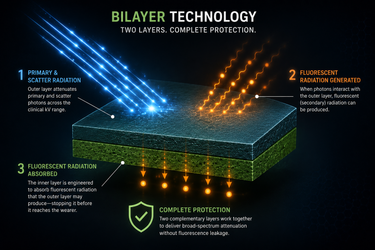
Scatter radiation is the primary occupational hazard for interventional staff, and most lead-free shielding materials have never been tested against it. Today, we’re going deeper into the material science behind Techno-Aide’s Bilayer, lead-free core that passes the most rigorous internat …
Deeper Dive into kV Levels

Deeper Dive into kV Levels

Jun 3rd 2026

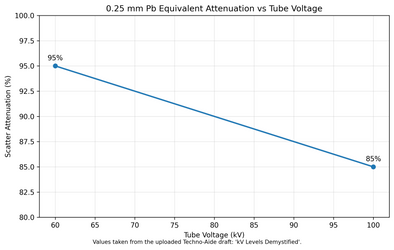
All radiation protection is not created equal. The apron hanging in your fluoroscopy suite does not provide the same level of protection regardless of the procedure. The truth is that the effectiveness of any radiation shielding material is directly tied to the energy of the X-ray beam it’s tr …
Pediatric Radiation Protection

Pediatric Radiation Protection

May 27th 2026

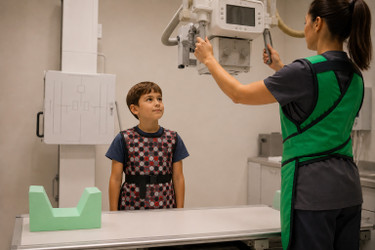
Pediatric patients are more sensitive to ionizing radiation, they have more years of life ahead in which radiation-induced effects could manifest, and the technical parameters used to image them should be fundamentally different from those applied to adults. Getting pediatric radiation protection ri …
Lead Apron Care, Storage, and Inspection Guide

Lead Apron Care, Storage, and Inspection Guide

May 20th 2026

A quality lead apron represents a significant financial investment but more importantly, it represents a commitment to staff safety. That investment, however, only pays off if the garment is maintained properly. Improper storage is the single most common cause of premature apron failure, and the res …