
Outlasting the Heat
Sep 29th 2026
When someone tells you the fabric in your radiation apron was developed for NASA spacesuits, it sounds like someone took a loosely related space fact and stretched it into a sales pitch. Fair skepticism, but in this case, it's true and the science behind it is worth understanding because it addresses one of the most persistent comfort problems in radiation protection.
The Problem: Heat Buildup Under Lead
Wearing a radiation protection garment is inherently hot. Whether the attenuating material is lead, lead-composite, or lead-free, it is dense and thermally insulating. It traps body heat against the torso. Add a vinyl or nylon fabric encasement, and you've created a wearable insulation system that prevents your body's natural heat from dissipating.
In a climate-controlled imaging department, this might be tolerable for short procedures. In a cath lab or OR where ambient temperature is already warm, where you're wearing scrubs under the garment, and where the procedure lasts two or three hours, the heat buildup becomes oppressive. Staff sweat through their scrubs. Discomfort escalates. Concentration suffers. And the temptation to just briefly remove the protective garment, even during an active exposure, grows with every degree of overheating.
This isn't a comfort preference issue. It's a safety issue. Staff who remove protective apparel due to heat discomfort receive unshielded radiation exposure.
What Outlast Technology Actually Does
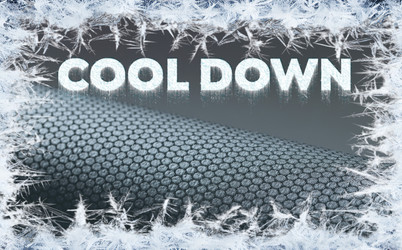
Outlast is a Certified Space Technology originally developed for NASA space glove liners. The technology earned its certification in 2003, and it works on a principle called phase-change material (PCM) absorption.
Here's the science: Outlast fabric contains microcapsules of phase-change material embedded in the fiber structure. When your body temperature rises and excess heat reaches the fabric, the phase-change material absorbs that heat energy by transitioning from a solid state to a liquid stat, much like ice absorbs heat when it melts. This absorption process takes heat energy away from your skin surface, creating a measurable cooling effect.
The key distinction from traditional approaches: Outlast is proactive, not reactive. Traditional moisture-wicking fabrics wait until you're already sweating, then try to move the sweat away from your skin. Outlast absorbs excess heat before you start sweating and delays the onset of perspiration rather than managing it after the fact. The difference in experience is significant: instead of sweating and being wicked, you simply don't sweat as quickly.
How It Differs from Wicking Fabrics
Most 'cooling' fabrics used in standard radiation apron liners are wicking materials. They work by capillary action so when sweat forms on your skin, the fabric pulls it away from the skin surface and spreads it across a larger area where it can evaporate. This does provide some cooling since evaporation is an endothermic process that removes heat. It only starts working, however, after you're already sweating. In the enclosed environment of a radiation apron, where evaporation is restricted, wicking has limited effect.
Outlast's phase-change mechanism works independently of evaporation. It absorbs heat directly, regardless of whether air circulation allows evaporation. Inside a radiation garment where air circulation is minimal, this distinction matters enormously.
The Practical Impact
Staff who wear Outlast-lined garments during extended procedures consistently report a noticeable difference in heat buildup compared to standard fabric liners. The onset of sweating is delayed, the sensation of oppressive heat arrives later in the procedure, if it arrives at all, and overall comfort during multi-hour cases improves meaningfully.
For interventional specialists who wear protective apparel for 6-8 hours per day, the cumulative comfort improvement is substantial. Comfort isn't just about preference. Comfortable staff maintain concentration better, experience less fatigue, and are less likely to make the dangerous decision to remove protective apparel during active exposures.
Availability
Outlast technology is available as a fabric option in select radiation protection garment configurations. It's a premium offering that adds cost to the garment, but for staff who wear protective apparel in high-heat environments for extended periods, it's an investment in both comfort and compliance. Ask your Techno-Aide representative about Outlast-equipped options for your department's highest-use garments.