
Total Body Fluoroscopy Protection Guide
Jul 6th 2026
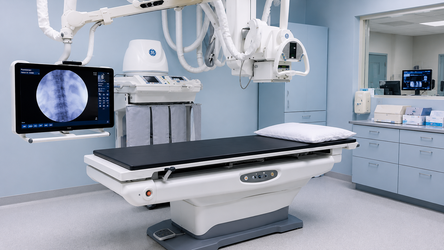
The fluoroscopy suite is the highest-exposure environment in diagnostic imaging. Fluoroscopy produces continuous radiation for the duration of the procedure. A complex interventional case may involve 30 minutes, 60 minutes, or more of fluoroscopic time, with staff positioned within feet of the patient and the scatter radiation field.
This continuous exposure environment demands comprehensive, layered radiation protection. No single piece of equipment provides complete coverage. Effective fluoroscopy suite protection is a system with multiple protective elements working together to shield every vulnerable region of the body.
Start at the Top: Eyes
The lens of the eye is exceptionally radiosensitive, and the ICRP's 2011 reduction of the annual lens dose limit from 150 mSv to 20 mSv reflected growing evidence of radiation-induced cataracts among interventional staff. Leaded eyewear with wraparound frames or side shields provides up to 90% dose reduction to the lens.
For fluoroscopy staff, goggle-style or wraparound leaded eyewear is recommended over flat-front frames. Research shows that most of the scatter radiation reaches the eye obliquely, from the sides and below. Frames that seal or shield these angles provide significantly better protection than those that only shield the frontal plane.
Techno-Aide offers 15 leaded eyewear styles, from sport wraparounds to fitover models for prescription wearers, ensuring every team member can find a comfortable option they'll wear consistently.
Protect the Thyroid
The thyroid gland sits in the anterior neck, fully exposed to scatter radiation during fluoroscopy unless shielded. A thyroid collar or integrated thyroid shield is a simple, inexpensive measure that dramatically reduces thyroid dose. For fluoroscopy staff, this should be non-negotiable.
Full Binding thyroid shields provide the most comfortable option for extended wear, with smooth edge finishing that eliminates skin irritation during long cases. Thyroid collars that integrate with vest-skirt systems simplify the donning process and ensure the thyroid is protected whenever the body garment is worn.
Shield the Torso: Vest-Skirt Systems
For fluoroscopy staff, vest-and-skirt systems are strongly recommended over traditional front-closing aprons. The two-piece design distributes weight between the shoulders and hips, reducing the musculoskeletal strain that drives many interventional professionals to orthopedic consultations.
Lightweight lead-composite and lead-free attenuating materials have made modern vest-skirt systems significantly lighter than their predecessors. Staff who upgrade from a traditional lead apron to a lightweight vest-skirt system typically report immediate improvement in comfort and endurance during long cases.
For primary operators who stand closest to the scatter source, 0.5mm Pb-equivalent protection front and 0.25mm Pb-equivalent protection rear is the standard configuration. For support staff positioned farther from the source, lighter configurations may be appropriate based on typical exposure patterns.
Protect the Hands
Interventional operators routinely work with their hands near or in the scatter field. New 2025 research has overturned previous guidance that discouraged radiation protection gloves, demonstrating 80% hand dose reduction with no increase in operator scatter exposure. For high-volume interventional practices, leaded gloves should now be part of the standard protective ensemble.
Techno-Aide's glove options from the dexterity-focused XGuard and FreeGuard to full-coverage Premium Finger Gloves provide protection across the range of procedural demands.
Mobile Barriers: The Fourth Wall
Mobile radiation barriers provide area shielding that protects any staff member positioned behind them. In the fluoroscopy suite, barriers are typically positioned to shield personnel who monitor the procedure but don't need to stand at the tableside such as nurses preparing medications, anesthesia staff, trainees observing the case.
Barriers with leaded glass windows (minimum 0.5mm Pb equivalent) allow protected observation of the procedure. The barrier does the shielding work, allowing the person behind it to work without wearing full protective garments which is particularly valuable for staff who move between shielded and unshielded positions throughout the day.
Techno-Aide's mobile barriers are available in multiple sizes and base configurations (H-base for tight spaces, star-base for maximum stability), with adjustable-height leaded glass panels.
The System in Practice
Effective fluoroscopy suite protection works as a system. The primary operator wears a vest-skirt, thyroid shield, leaded eyewear, and radiation protection gloves. Support staff at the tableside wear at minimum a vest-skirt and thyroid shield. Personnel positioned away from the table work behind a mobile barrier. Every person in the room wears a dosimetry badge.
This layered approach addresses the reality that fluoroscopic scatter radiation comes from multiple angles and affects different body regions differently. No single protective element covers everything but used together, they reduce whole-body and organ-specific doses to manageable levels even across high-volume, career-length exposure.
Techno-Aide is the single-source manufacturer for every element of this system: leaded eyewear, thyroid shields, vest-skirt systems, radiation protection gloves, and mobile barriers. One manufacturer, one order, one point of contact for the complete fluoroscopy protection package.